
This article was developed with the assistance of Chloe Lam and Audrey Su, two Masters of Nutrition and Dietetics students from the University of British Columbia.
When you think of a dietitian, you might picture someone giving one-on-one advice about food choices. That’s part of the story, but in Northern Health, dietitians fill a variety of roles. Population health dietitians, for example, work at the intersection of food systems, public policy, and community wellness, using evidence-informed strategies to improve health outcomes across the region.
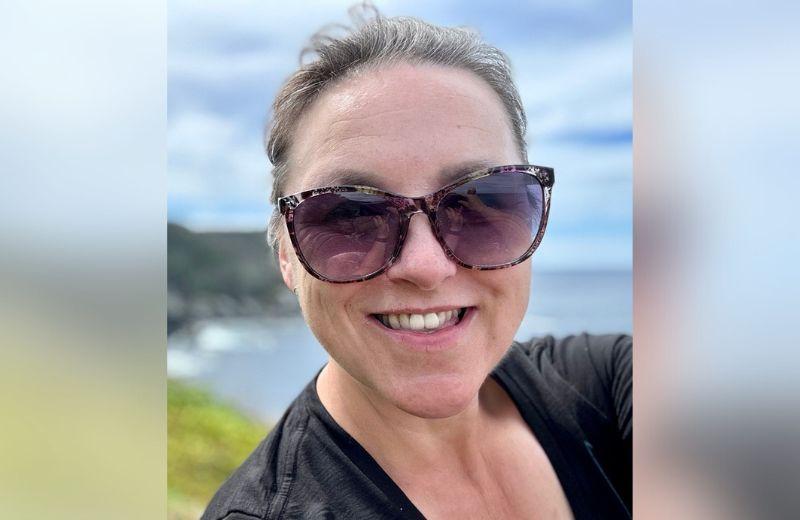
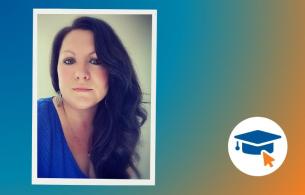
Flo Sheppard shares how population health dietitians work to promote healthier communities across the health authority.
What is the role of the Population Health Nutrition Team at Northern Health?
I am the Team Lead for the Population Health Nutrition Team and the Regional Dietitian Lead – Weight-Inclusive Approaches, within the Population and Public Health department. The team includes three additional incredible dietitians who lead work in early years nutrition, school age nutrition, and food security.
A key part of our approach is a commitment to decolonizing our practice. This isn’t just a value; it’s a guiding principle that shapes how we show up in our work every day. From our position on ‘culture and tradition’ and ‘food systems’, which reflects on the importance of Indigenous food sovereignty, to Northern Health’s Rural, Remote and Indigenous Food Action grants, we are continuously working to reduce barriers for Indigenous Peoples.
Together we work across Northern BC, focusing on promoting food security and healthy eating for diverse Northern populations. Our work is about building capacity, connecting communities to resources, and supporting partnerships, within and beyond Northern Health.
What do you appreciate most about your work?
A sample of the many aspects I appreciate about the team’s work:
- The opportunity to shape the direction of our work and allow for innovation. For example, Northern Health is the only regional health authority that has an official role focused on weight-inclusive approaches, which has a focus on reducing weight bias, stigma, and discrimination.
- Working within a supportive team that values shared learning, growth, and excellence.
- Taking a big-picture view of healthy eating and focusing on the determinants of health.
- Being able to highlight the unique strengths and needs of rural and remote communities.
What is a misconception about your role you’d want to clarify for others?
I was once told I wasn’t a “real dietitian” because I didn’t see clients one-on-one. Around the same time, someone apologized to me about the lunch they were eating, saying “I’m being bad, I know this isn’t healthy”.
Both moments made me pause. They revealed how narrow the public view is of what dietitians do, who we are, and what we value.
In population and public health, our clients aren’t individuals; they are entire communities, regions, and systems. We work upstream, focusing on equity, capacity building, food environments, and policy. Our goal isn’t to monitor food choices; it's to help create conditions where healthy eating is possible, accessible, and culturally meaningful.
This is no small feat in Northern BC. Our region is roughly the size of France, and our team is small. We are constantly navigating how to make meaningful, region-wide impact with limited resources. It’s challenging but also very rewarding.
Dietitians make up an important part of the allied health care team. To learn more about the wide range of allied health professionals involved in the health system, check out Allied Health Professions and Occupations - Province of British Columbia.

Comments