

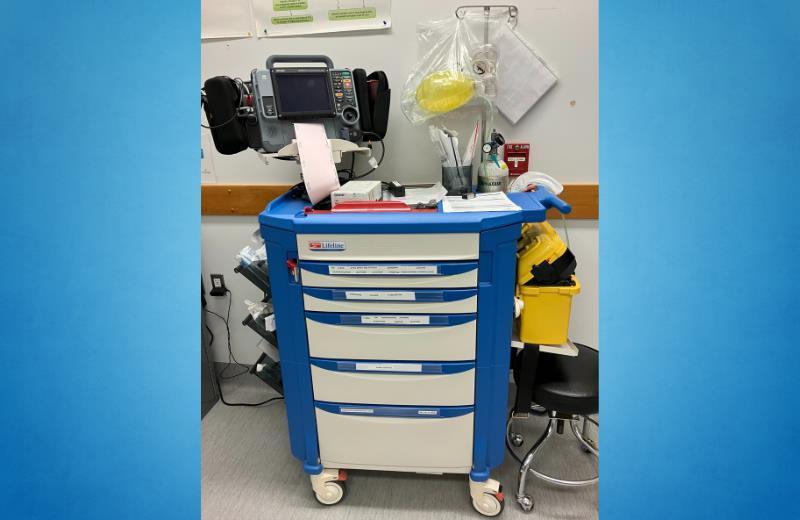
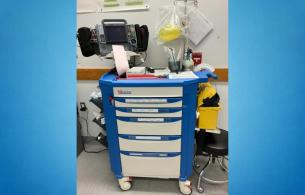
A Northern Health (NH) multidisciplinary project team is currently working towards the goal of developing and implementing standardized resuscitation (crash) carts across acute care at NH. The resuscitation cart, commonly called a crash cart, is a self-contained, mobile unit that contains virtually all the materials, drugs, and devices necessary to respond to immediate resuscitation needs or life-threatening medical emergencies.
This initiative will help ensure consistency, safety, and efficiency, in emergency response, while still meeting the unique needs of each site. Additionally, this project aims to streamline equipment and medication availability, reduce variability, and support best practices aligned with Advanced Cardiac Life Support (ACLS) protocols, ultimately improving patient outcomes during critical events.
Why cart standardization matters:
- Enhances patient safety: Ensures essential emergency medications and equipment are consistently available and appropriately stocked across all sites.
- Reduces variability: Minimizes confusion and delays during critical events by aligning cart contents with ACLS guidelines and best practices.
- Supports staff confidence: Familiarity with standardized carts improves response times during high-stress situations.
- Facilitates training and education: A consistent setup allows for more effective training and simulation exercises across the region.
- Improves operational efficiency: Streamlined restocking processes and clear guidelines reduce waste, duplication, and errors.
- Addresses site-specific needs: While standardization is the goal, flexibility is built in to accommodate differences in service levels, staffing models, and equipment availability.
This standardization minimizes stress and maximizes efficiency for staff when seconds count during critical events like cardiac arrest, directly improving patient outcomes.
Our team looks forward to continuing this important work across the Northern Health region!







Comments