

In the heart of Northern BC, Northern Health’s Northern Clinical Simulation (NCS) Program is transforming health care education through immersive, hands-on learning experiences. With simulation centres located in Prince George, Fort St. John, Terrace, and Quesnel. The program equips health care professionals with the skills and confidence needed to deliver safe, effective care.
How did it start?
The program was formed in 2011 to support educational activities using a full range of patient simulators, from infant to adult, that can be applied to many different disciplines and learning environments.
What is clinical simulation?
Clinical simulation uses life-sized, anatomically correct human models to provide realistic training for student nurses, staff nurses, medical students, physicians, and other health care professionals.
The simulators can be used with real medical equipment, allowing practice with burns, labour and delivery, resuscitation and advanced life support, heart attacks, and more.
At the core of our training are life-sized, anatomically accurate simulators - mannequins that breathe, speak, bleed, and respond to clinical interventions. These advanced tools allow learners to safely practice complex scenarios all in a controlled environment with zero risk to patients.
What we do
Northern Clinical Simulation supports a wide range of learners, including:
- Nurses
- Physicians
- Paramedics
- Medical students
- Allied health professionals
We offer structured and customized training in:
- Basic and Advanced Life Support (BLS/ACLS)
- Maternal and neonatal resuscitation
- Trauma and emergency response
- Procedural skills training
- Team communication and leadership
Celebrating and collaborating: Simulation Week
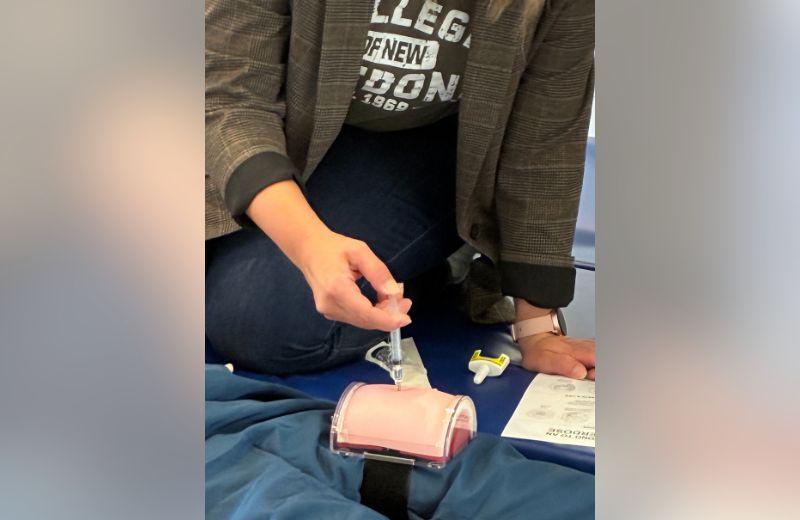
To celebrate Simulation Week, September 19-25, 2025, the NCS Centre team proudly partnered with the Prince George Overdose Prevention Clinic team for a powerful outreach event focused on overdose awareness and emergency response training.
Our teams visited the College of New Caledonia (CNC) and the Interior Medical Unit, where we engaged with 60 participants, including students, health care staff, and community members, through hands-on simulation activities.
What we did
Using high-fidelity simulators and injection pads, we guided participants through realistic overdose scenarios. The goal was to equip them with the skills and confidence to respond effectively in critical moments.
Learning objectives
- Recognize signs of an overdose
- Administer naloxone safely and confidently
- Perform effective CPR when no pulse is detected
This event was more than a training session; it was also a bridge between health care teams and the community. By bringing simulation out of the lab and into a public space, we helped raise awareness, reduce stigma, and empower individuals with life-saving knowledge.
A huge thank you to the NCS team and the overdose prevention clinic team for their collaboration and commitment. Your participation in the outreach event made a real impact, and we’re proud to have connected with so many passionate participants.
Together, we’re building a safer, more informed community.
Collaborations and partnerships
Our work is made possible through strong partnerships with funding organizations and academic institutions that share our vision for excellence in health care education.
Did you know that the Northern Clinical Simulation program is a partnership between Northern Health, University of Northern British Columbia School of Nursing, the College of New Caledonia, Coast Mountain College and the Northern Medical Program? These collaborations allow us to integrate simulation into health care curricula, support clinical placements, and co-develop innovative training programs that benefit learners across the region.
Funding partners
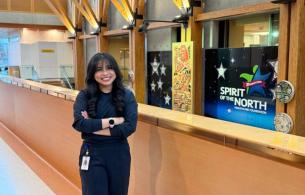
We are proud to be supported by organizations such as Spirit of the North Healthcare Foundation and other regional and provincial health education funders
Their generous contributions help us expand access to simulation-based learning and invest in cutting-edge equipment and resources.

Comments