

For Dr. Bron Finkelstein, returning to Northern BC wasn’t just a career move - it was a homecoming.
Finkelstein, who grew up in Quesnel and trained at the University of Northern British Columbia (UNBC) and Loma Linda University in California, is now Chief of Staff in Chetwynd and site lead for the Chetwynd Rural Immersion Program. The initiative, run in partnership with University of British Columbia’s (UBC) Family Practice Department, is designed to train family doctors in the communities where they’re most needed.
“I’m a rural family doctor, first and foremost,” Finkelstein said. “I wanted to do full-service family medicine after I finished medical school and Prince George was a very natural fit. It was close to my home, but also had a really strong program and a good reputation for training up rural doctors.”
After exploring several communities with his wife, a pharmacist, Finkelstein chose Chetwynd for its scope of practice and the support offered by Northern Health’s alternate payment model. “That particular payment model was a major decision-making factor for us in choosing our community,” he said.
For the North, in the North
The Rural Immersion Program, now in its second year, places residents in communities like Chetwynd and Tumbler Ridge, where they learn everything from emergency medicine to long-term care. The goal: to immerse trainees in the realities of rural practice, rather than sending them to larger academic centres.
“If we want people to train for rural practice, we should train them in rural practice,” Finkelstein said. “We immerse them, thus the name rural immersion, in a community that is similar in size or context to how they want to practice medicine.”
Residents rotate through clinics, emergency departments, and home visits, sometimes travelling to Dawson Creek or Prince George for specialized training, such as in maternity care. The academic curriculum is shared with other Northern sites, ensuring robust support while maintaining a local focus.
Along with Chetwynd and Tumbler Ridge, the program is also offered in Mackenzie, McBride, Quesnel, Smithers, Terrace, and Valemount.
However, capacity is limited. Each rural site hosts just one resident per year, a decision driven by the need to maintain high-quality training.
“We only have so many physicians in our rural community and of those physicians, some are more experienced or involved as preceptors than others,” Finkelstein explained. “Our primary care clinic can only hold so many physicians physically at a time and there’s only so much bandwidth to train individuals.”
The program attracts trainees who are passionate about rural medicine and eager to put down roots. “We get a selection bias of people who like rural and want to practice rurally,” Finkelstein said. “They can make community connections and actually start putting down some roots in a community that they could choose to stay in once they’re finished their training.”
A heart for rural medicine
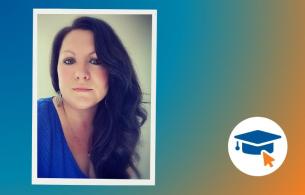
Dr. Yonabeth Nava de Escalante is an international physician from Venezuela and is currently enrolled in the Rural Immersion Residency Program.
“I am a rural physician by heart,” stated Nava de Escalante. “I really care about the people. I love living and working in a small community. I like that I know the person, I know the parents, I know the children. I can take in the entire family, and that gives me such a different context, because I know a little bit more about those social determinants of health that I have learned in my public health training. This is such a different approach to medicine.”
While the program is still young - its first senior resident will graduate in July 2026 - Finkelstein is optimistic about its impact on recruitment and retention. “It’s not just about recruiting the trainees who graduate, but it actually also helps retain physicians in community when they are fulfilling their sense of a higher calling to actually train the next generation of physicians,” he said.
The presence of resident doctors has been embraced by the community, even though the concept was initially unfamiliar.
“We’ve had incredible buy-in from the community,” Finkelstein said. “They see this potential of training people in the North for the North, in the rural community for the rural community.”
He credits local Northern Health partners and clinic staff for making residents feel integrated and welcomed.
“The normal stream is block-based where you rotate through different areas, but here we are training residents right in the rural communities,” he noted. “So I become familiar with the resources that I have, with the constraints that I have. I know a little bit of the politics in the area, which, you know, even if we don't want to, that influences also the way we practice. I really like the way we train. I like the fact that it's a longitudinal approach to family medicine, so it's not like every block I'm going to have exposure to something specific here. Every day is different and every day I'm learning.”
Award-winning
Finkelstein received a 2025 Clinical Faculty Award for Excellence in Clinical Teaching at this year’s UBC Faculty of Medicine Awards. The award celebrates the teaching excellence of clinical faculty members across UBC’s many medical education teaching sites across the province.
Dr. Nava de Escalante also received the Resident Leadership Award from the Rural Coordination Centre of BC (RCCbc) as part of the 2025 BC Rural Health Awards. The awards celebrated individuals and communities making a difference in rural health care across the province.
The Resident Leadership Award recognizes a medical resident in good academic standing who has shown a sustained interest in rural and remote medicine in BC.
Next generation of care in the North
For Finkelstein, the rewards go beyond medicine. “It’s super fulfilling. It’s such a joy to work with residents every day,” he said. “They teach us, they keep us up to speed on current practices and practice standards and best practice evidence-based medicine. But we also have many things to teach them, and it is a two-way benefit.”
As the program grows, Finkelstein hopes it will strengthen the region’s medical ecosystem. “We don’t want to be isolationist. This ecosystem is very dependent on all of the players. So we hope to see it continue growing and kind of strengthening our area,” he said.
“I know exactly what to expect the day I graduate,” said Nava de Escalante. “I finish on June 30 and July 1, I'm just going to keep doing exactly what I'm doing. That is very different for a resident in a different program because they don't know exactly what to expect. And so for me, I know what makes me happy. I know that having a schedule where I'm hospitalist one day, and then the other day I'm in the ER, and the other day I'm in the clinic, and the other day I'm in long-term care. I know that is what makes me happy.”
For communities across Northern BC, the Rural Immersion Program is more than a training initiative - it’s a promise that the next generation of doctors will be ready, willing, and able to serve where they’re needed most.
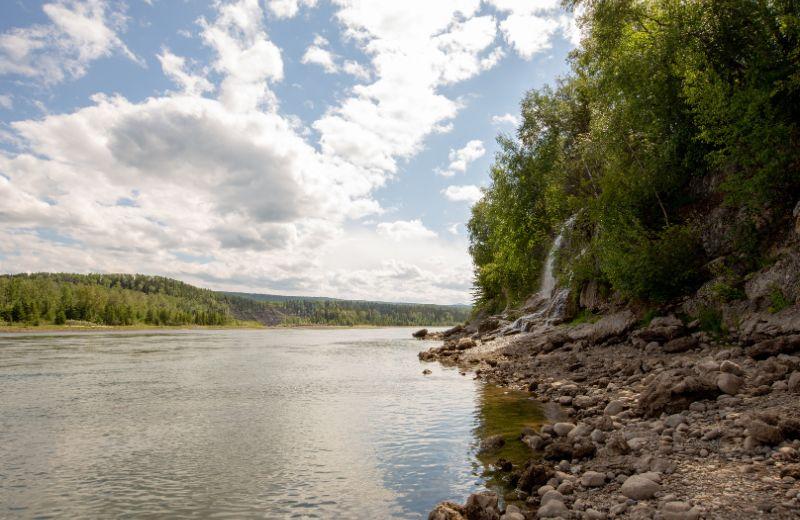
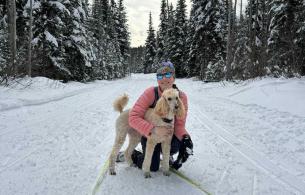
“I find in a rural community like Chetwynd, I finish my clinic, I grab my chair and go to the river. Where can you do that? My commute time is two minutes. I can finish my day at the clinic and go for a walk in the nature; I can go to the river; I can go to the lake. Even in the winter I can go on a hike. I have a picture of me on December 23rd doing a hike in the local mountain with my dog and my husband. Where can you do that? Only here,” stated Nava de Escalante. That is the main reason why I don't think people know exactly what it is to work in a rural place - because it's absolutely beautiful.”

Comments