


My name is Sandra Wyatt, and for 28 years I worked as a child life specialist in pediatrics. During Child Life Professionals Month, I often think back to how one small idea — and one very small dog — helped shape care for children, families, and staff in our hospital.
I rescued dogs all my life, so I understood the quiet comfort they can bring. I also knew, deep down, that therapy dogs could make a real difference in a hospital setting — especially for children who were scared, hurting, or overwhelmed.

After many conversations and meetings with our hospital leadership, I helped create a therapy dog and regular dog visitation program that could be used on any unit. We put the right credentials in place, worked closely with head nurses, and made sure every dog was properly trained, validated, and clearly identified in their therapy vests. Once everything was approved, the program began.
My chihuahua, Jazz, who is 15 years old now, became one of the first therapy dogs. She came to work with me most days, and it didn’t take long for people to notice the change. Children who were anxious softened. Procedures became easier. Smiles appeared where fear had been.
Jazz was especially helpful during needle pokes. I would tell children that Jazz was scared of needles, too, and that we needed to cover her eyes so she wouldn’t see. The children became so focused on protecting Jazz that, before they knew it, the procedure was over.
One moment with her still stands out for me out of her illustrious career. A baby was admitted in pain and fear, crying nonstop while their mother cried too. With permission, I placed Jazz gently in the crib. She curled herself around the baby’s head, and the child crying stopped. Later, my veterinarian explained that a dog’s heartbeat can align with a baby’s fontanelle — a calming connection I will never forget.
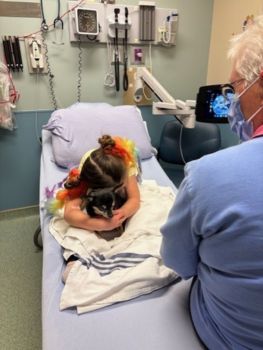
Sometimes, Jazz and I rode on the patient bed down to the operating room to help keep a child calm until the very last moment. Many staff found it funny — and touching — to see this tiny dog rolling down the hallway with such an important job.
Jazz also supported children who had experienced abuse. Some who wouldn’t open up to staff opened up to her instead. She didn’t ask questions. She just listened. And, of course, she never shared their secrets.
Jazz became well known on the pediatrics unit. She scratched at the manager’s door every morning for treats, then visited the unit clerk for more snacks and cuddles. While she was there for patients, she supported staff too, making hard days a little more bearable.
For our palliative patients, Jazz would lie beside them, offering comfort as they drifted in and out of sleep. There really isn’t something comparable to a dog’s kindness and unspoken understanding.
Today, as a casual child life specialist, I still bring Jazz with me. Some patients have grown up with her by their side through weekly or monthly treatments and seeing her again can change their entire hospital experience.
If we can make our smallest patients feel even a little better in a hospital setting, that’s what we do. And Jazz — then and now — has always been a huge part of that work.
March is Child Life Professionals month! Join us in celebrating Child Life Specialists and the special work they do.









Comments